Latest institutional research shows the global semiconductor industry is in a high-growth cycle, but hidden risks lurk behind the boom, with increasingly prominent structural differences. By 2036, the industry's annual sales are expected to exceed $2 trillion.
Driven by AI infrastructure construction, global semiconductor sales are projected to reach $975 billion in 2026, a record high. Deloitte’s "2026 Global Semiconductor Industry Trends Report" notes that despite soaring chip sales, the industry will focus on risk aversion, integrated system architecture and balanced investment strategies to address potential demand slowdown.
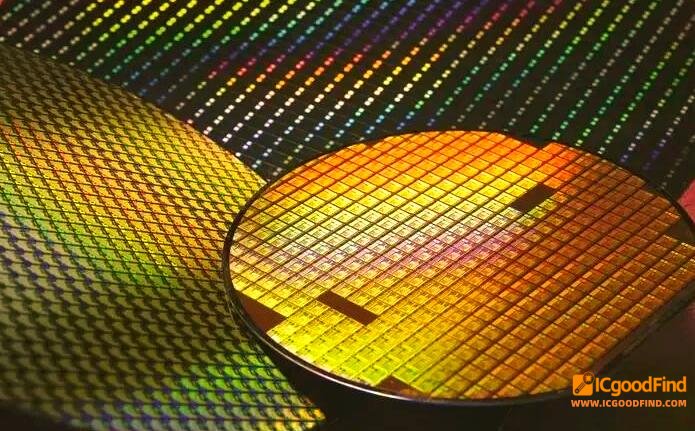
The report states the industry grew by 22% in 2025 and will accelerate to 26% in 2026. A key structural difference: high-value AI chips contribute about half of total industry revenue but account for less than 0.2% of sales volume.
Another gap lies in segments: while AI chips thrive, chips for automotive, computers, smartphones and non-data center communications grow relatively slowly, leading to a polarized growth trend.
AI demand is also restructuring the global semiconductor supply chain. Memory revenue is expected to hit $200 billion in 2026, accounting for 25% of total industry revenue. Surging AI demand for high-end memory such as HBM3, HBM4 and DDR7 has caused shortages of consumer-grade memory (DDR4, DDR5), whose prices rose about 4x from Sept to Nov 2025 and may climb up to 50% in H1 2026, bringing systemic risks to industry leaders.
To cope with the 3-4x annual growth in AI workloads, Chiplet technology is widely adopted to improve chip yield and energy efficiency. CPO (Co-packaged Optics) and LPO (Linear Pluggable Optics) will be widely used in 2026, reducing power consumption by 30%-50% and improving bandwidth efficiency.
Notably, AI network architecture spending is expected to grow at a 38% CAGR from 2024 to 2029. A new AI computing capital cycle has begun, with 2025 industry investment likely to continue or accelerate in 2026.
ICgoodFind: The semiconductor industry’s high growth is promising, but structural differences and supply chain risks require vigilance, and technological innovation is the core driver of sustained development.
